



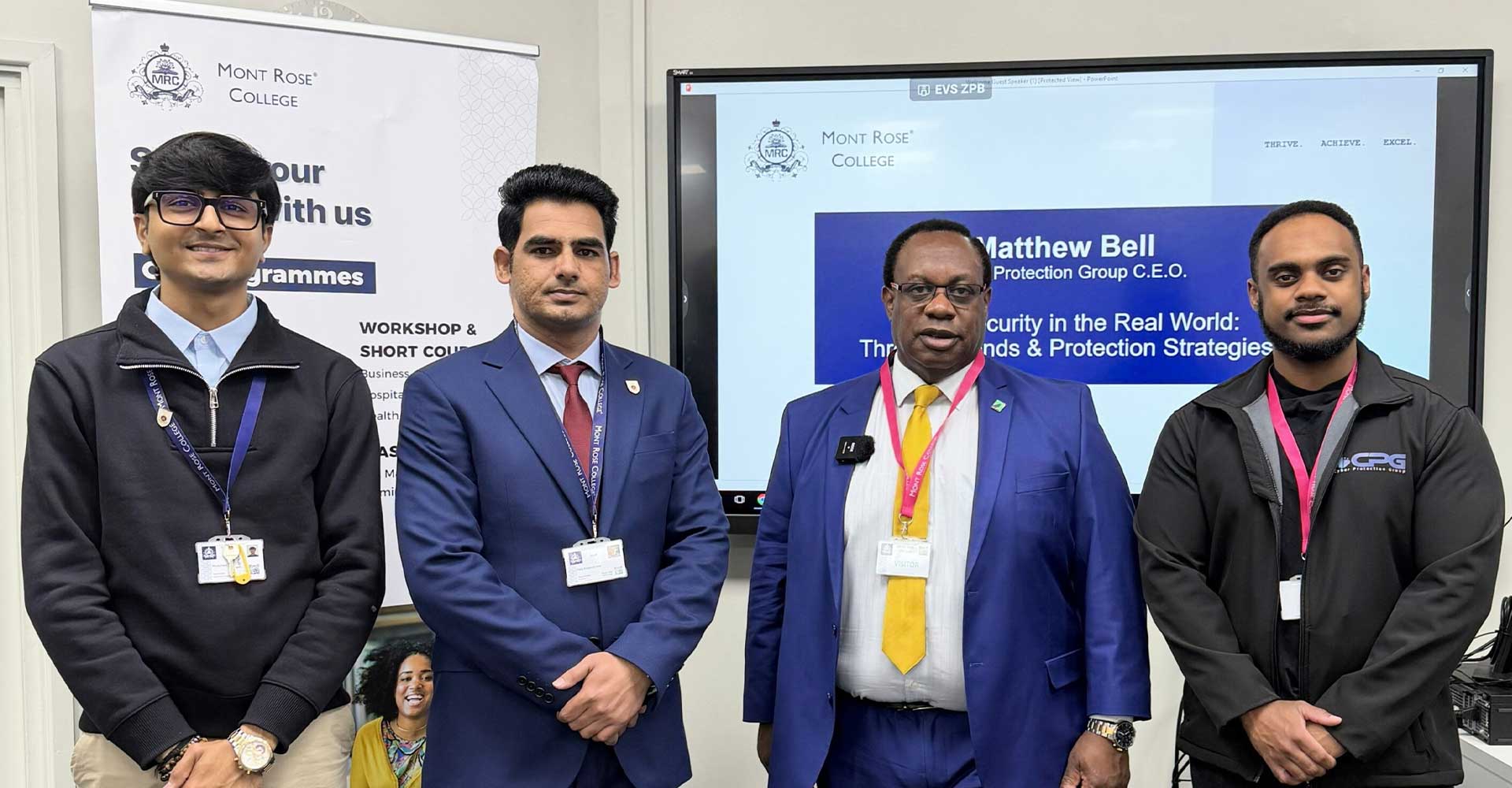
The cybersecurity landscape of 2026 bears little resemblance to the threats we faced just a few years ago. On 9th March, students and aspiring cybersecurity professionals gathered at Mont Rose College for an insightful session on “Cybersecurity in the Real World: Threats, Trends & Protection Strategies.” The event featured Matthew Bell, CEO of Cyber Protection Group, who shared practical knowledge about modern cyber threats, emerging security trends, and strategies individuals and organisations can use to stay protected.
The session provided a valuable learning experience for students, cybersecurity enthusiasts, and anyone interested in digital safety. With an interactive format, the event encouraged participants to ask questions, exchange ideas, and gain real-world insights from an industry expert.
Understanding Cybersecurity in Today’s Digital Landscape
As our lives become increasingly digital, cybersecurity has moved from being a niche technical concern to a critical global priority. Businesses, governments, and individuals all rely on digital systems, making them potential targets for cybercriminals. During the session, Matthew Bell emphasised that cyber threats are constantly evolving. Attackers are becoming more sophisticated, using advanced techniques such as phishing, ransomware, social engineering, and data breaches to exploit vulnerabilities. He explained that cybersecurity is no longer only about technology — it is equally about people, processes, and awareness. Even the most secure systems can be compromised if users are not properly informed about digital risks.
Key Cyber Threats in the Real World
One of the highlights of the session was an overview of the most common cyber threats affecting organisations and individuals today.
-
Phishing Attacks
Phishing remains one of the most widespread cyber threats. Attackers often disguise themselves as trusted organisations through emails or messages, attempting to trick users into revealing sensitive information such as passwords or financial details.
-
Ransomware
Ransomware attacks involve malicious software that locks or encrypts a victim’s data. Cybercriminals then demand payment in exchange for restoring access. These attacks have increasingly targeted businesses, healthcare institutions, and public services.
-
Social Engineering
Rather than hacking systems directly, attackers manipulate people into giving away confidential information. This highlights the importance of human awareness as a key defence mechanism.
-
Data Breaches
Large organisations often store vast amounts of personal data. When security systems fail, this data can be exposed or stolen, leading to financial loss and reputational damage.
Matthew Bell stressed that understanding these threats is the first step toward building effective cybersecurity practices.

Emerging Trends Shaping the Cybersecurity Industry
The cybersecurity landscape is constantly evolving as technology advances. During the talk, several important trends shaping the future of cybersecurity were discussed.
Increased Use of Artificial Intelligence
Artificial intelligence is being used both by cybersecurity professionals and cybercriminals. While security teams use AI to detect threats faster, attackers may also exploit AI tools to automate attacks.
Rise of Remote Work Security Risks
With many organisations adopting hybrid or remote working models, securing home networks and personal devices has become a significant challenge.
Growing Demand for Cybersecurity Professionals
Matthew Bell highlighted the increasing global demand for skilled cybersecurity professionals. As cyber threats grow, organisations are investing more in security teams and infrastructure.
For students attending the session, this was particularly encouraging, as cybersecurity continues to offer strong career opportunities across industries.
Practical Cyber Protection Strategies
The session also focused on practical strategies that individuals and organisations can implement to strengthen their digital security.
-
Strong Password Management
Using unique and complex passwords for different accounts significantly reduces the risk of compromise. Password managers can help users securely manage their credentials.
-
Multi-Factor Authentication (MFA)
MFA adds an additional verification step when logging into accounts, making it much harder for attackers to gain access even if passwords are stolen.
-
Regular Software Updates
Keeping systems and applications updated ensures that known security vulnerabilities are patched promptly.
-
Cybersecurity Awareness Training
Educating employees and individuals about cyber threats is one of the most effective ways to prevent attacks.
Matthew Bell emphasised that cybersecurity should be viewed as an ongoing process rather than a one-time solution.
An Interactive Learning Experience for Students
One of the most engaging aspects of the event was the interactive discussion between the speaker and students. Participants actively asked questions about cybersecurity careers, real-world attack scenarios, and the skills needed to enter the industry. Matthew Bell shared valuable advice for aspiring cybersecurity professionals, encouraging students to develop strong technical skills, stay updated with industry trends, and continuously practise problem-solving. The session also allowed students to share their perspectives and experiences, making it a collaborative and enriching learning environment.
Inspiring the Next Generation of Cybersecurity Professionals
Events like this play an important role in bridging the gap between academic learning and real-world industry experience. By interacting directly with industry leaders, students gain practical insights that go beyond textbooks and classroom discussions. The talk by Matthew Bell not only highlighted the challenges of the cybersecurity landscape but also inspired students to explore opportunities within this rapidly growing field. The Cybersecurity in the Real-World session at Mont Rose College was a valuable and engaging experience for everyone who attended. Through expert insights from Matthew Bell and active student participation, the event successfully highlighted the importance of cybersecurity awareness in today’s digital world. As cyber threats continue to evolve, events like these help prepare the next generation of professionals with the knowledge and motivation needed to protect our digital future.